
The record breaking spree was led by index heavyweights, financials and metal stocks.

'If you look at the order books of capital equipment companies or money deployed on the ground, there is forward movement in terms of actual investment by the private sector.'
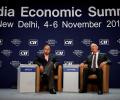
Top 10 trends for 2015 are deepening income inequality; jobless growth; lack of leadership; rising geostrategic competition; weakening of representative democracy; rising pollution in developing world; rising occurrence of severe weather events; intensifying nationalism increasing water stress and growing importance of health in the economy.
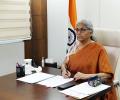
Finance Minister Nirmala Sitharaman on Saturday said the new tax regime will benefit the middle class as it will leave more money in their hands. Talking to reporters after the customary post-Budget address to the central board of the RBI, she said it is not necessary to induce individuals to invest through government schemes but give them an opportunity to make a personal decision regarding investments. "...the way we allowed for standard deduction and also the rates which have been fixed, tax rates which have been fixed for different slabs, it has actually left more money in the hands of the people, the taxpayer, the household," she said.

Reserve Bank of India (RBI) Governor Shaktikanta Das on Thursday said the country's economy has recovered stronger than expected from the initial impact of the COVID-19 pandemic, but there is a need to be watchful of demand sustainability after the end of festivities. Speaking at the annual day event of Foreign Exchange Dealers' Association of India (FEDAI), Das said there are downside risks to growth across the world and also in India. It can be noted that the Indian economy contracted by 23.9 per cent in the first quarter of the fiscal year, and the RBI expects the economy to shrink by 9.5 per cent in FY21.

The Indian aviation sector is on the cusp of a change as airlines look to induct a record number of aircraft. This, analysts said, will put the sector on a growth runway, though keeping it viable for only long-term investors. According to Vinit Bolinjkar, head of research at Ventura Securities, expectations of strong air traffic, coupled with low penetration, is the prime reason for a solid long-term outlook.

Modi attended the 20th ASEAN-India Summit in Jakarta. Secretary-General of ASEAN Dr Kao Kim Hourn also attended the summit.

Prospective buyers must make a well-considered decision regarding whether this is the right time to buy a house, particularly with home loan rates at near-peak levels, and the risk of job losses looming in many sectors.

Reliance Industries raced to 52-week high on better than estimated earnings and announcement of bonus share.

He says he does not share IMF's pessimism.

The Indian rupee is down nearly 2 per cent against the US dollar since the beginning of January 2019. Experts attribute the Indian rupee's relatively poor performance to a sharper-than-expected fall in economic growth in India.

'We are cautious only on sub-sectors that have seen massive melt-up during the past six months.'

RBI must balance the need for improving domestic bank credit demand and respond to lower inflation.


The chemicals sector's recovery could be delayed until FY25 if the current trends of weak demand and flat pricing continue. Following a subdued September quarter, the revenue and profit performance of listed chemicals companies are anticipated to fall short of initial expectations of an improvement. Despite some price stability, the demand trajectory remains uncertain.

Overall, the credit profiles of players will be supported by healthy balance sheets and liquidity. Prudence in capital and development expenditure, efficient working-capital management, and recent equity raising will help sustain credit metrics in FY22.

China's economy, which suffered 6.8 per cent slump in the first quarter due to the coronavirus pandemic -- the worst in 44 years -- bounced back posting 4.9 per cent growth between July and September buoyed by the government's sweeping efforts to stimulate demand and consumption.

India's GDP growth for the current fiscal is expected to slow down to 4.8 per cent, a UN report has said, warning that the Covid-19 pandemic is expected to result in significant adverse economic impacts globally. The UN 'Economic and Social Survey of Asia and the Pacific (ESCAP) 2020: Towards sustainable economies' said that Covid-19 is having far-reaching economic and social consequences for the region, with strong cross-border spillover effects through trade, tourism and financial linkages.

IMF cut its 2016 global growth forecast for the fourth time in the past year to 3.2 per cent, citing China's slowdown.
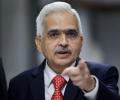
RBI Governor Shaktikanta Das on Friday called upon G20 nations to resolutely address the challenges, like threats to financial stability and debt distress that confront the global economy. Addressing the inaugural session of the meeting of G20 finance ministers and central bank governors, Das said although the outlook for the global economy has improved in recent months and there is now greater optimism that the world may avoid a deep recession and only experience slow growth or softer recession,"yet uncertainties lie ahead of us." "Together we must resolutely address the challenges that confront us, including those that are of medium to long-term nature such as threat to financial stability, debt distress, climate finance, fractures in global trade and strains on global value chains.
Global growth, according to IMF, likely to be lower at 3.3%

Growth in emerging market and developing economies will slow to 4.4 per cent in 2014, before rising to 5.0 per cent in 2015, it said.

Global funds, according to Christopher Wood, global head of equity strategy at Jefferies, are now beginning to pay more attention to India with the market now offering 30 companies with a market capitalisation over $25 billion.
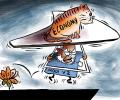
The country's new economic roadmap highlights the importance of creating a virtuous cycle of investment, savings and exports in order to sustain rapid economic growth over the next five years.
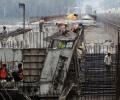
The change in the latest Budget will impact the sale and rent of SEZ units of companies like Adani Port, which has large SEZs in Mundra.

As the COVID-19 pandemic continues to unravel in various parts of the country, the World Economic Forum on Monday announced the cancellation of its high-profile annual meeting for 2021 after postponing it at least twice along with two changes in venue. The next annual meeting will now take place in the first half of 2022, while the location and date would be determined after assessing the situation later this summer, said the Geneva-based organisation that has been hosting a yearly congregation of the rich and powerful from across the world in Swiss ski resort town of Davos for 50 years. This year's Davos summit was originally scheduled for January 2021, but was later moved to a different location in Switzerland, Lucerne, and then to Singapore with an August 2021 schedule.

The four key risk areas India needs to focus on at the moment include economic security, energy security, agriculture and food security and national security, it adds. The WEC-CII report says many issues facing India in these four areas will require considerable long-term investment from both public and private sectors. 'Decision-makers in government and business will be forced to make trade-offs as to where spending and investments are allocated,' it said.
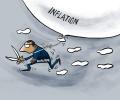
'If all goes well, we may well hit or even surpass the forecast growth rate.'
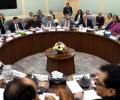
India's likely medium-term potential growth will almost certainly be markedly lower than that experienced in pre-pandemic years, warns Shankar Acharya, former chief economic advisor to the Government of India.

However, India is likely to regain the tag of the fastest growth emerging economies of the world in 2018.
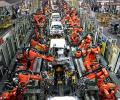
India's economy grew 6.1 per cent in the fourth quarter of 2022-23, pushing up the annual growth rate to 7.2 per cent, official data showed on Wednesday.
There is talk of a fresh approach to a new labour code as well as reforming land acquisition laws in such a way as to be politically.

The members of Association of Southeast Asian Nations are Indonesia, Malaysia, the Philippines, Thailand, Vietnam, Brunei Darussalam, Singapore, Cambodia, Lao PDR and Myanmar.

The central bank maintained its bias towards a rate hike.

China, it said, is projected to grow at 6.6 per cent in the current year which will moderate to 6.4 per cent next year.

IMF said in 2017, India is likely to grow at the rate of 7.2 per cent instead of the earlier projected 7.6 per cent.

'There is a time for lowering one's expectations of the economy -- and therefore not trying to do too much in the Budget,' notes T N Ninan.
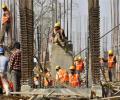
"We see the Indian economy rebounding from our projected 6.1 per cent growth this fiscal year to something like 7 per cent in the next fiscal year (2020). We see the factors that will support growth, including monetary policy stimulus, working their way through the pipeline," Jonathan Ostry, Deputy Director, Asia Pacific Department at the IMF, told reporters.

The accelerating pace of digitalisation, fuelled by the COVID-19 pandemic, has led to a record-breaking year for cybercrime with ransomware attacks rising 151 per cent in 2021, and an average of 270 cyberattacks per organisation being faced, a new study showed on Tuesday. The World Economic Forum's 'Global Cybersecurity Outlook 2022', released during its online Davos Agenda summit, further said that each successful cyber breach cost a company $3.6 million (nearly Rs 27 crore) last year, while the average share price of the hacked company underperformed NASDAQ by nearly 3 per cent even six months after the event in case of the breach becoming public. The WEF said the global digital economy surged on the back of the COVID-19 pandemic, but so has cybercrime and nearly 80 per cent of cyber leaders now consider ransomware a 'danger' and 'threat' to public safety.

It is a wonder how pervasive and long-lasting the damage can be from a balance-sheet crisis, says Suman Bery.
